Subject
Calendars & Timekeeping
How calendars work, leap rules, the seven-day week, and the history of calendar reform.
-
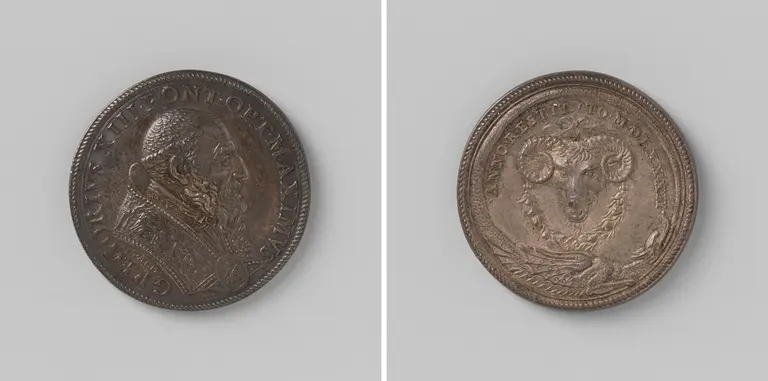
Photograph Credit
"Pope Gregory XIII, on the introduction of the new calendar (Paus Gregorius XIII, op de invoering van de nieuwe tijdrekening), Rijksmuseum NG-VG-1-442" by Lorenzo Parmense (Rijksmuseum, Amsterdam) — https://commons.wikimedia.org/wiki/File:Paus_Gregorius_XIII,_op_de_invoering_van_de_nieuwe_tijdrekening,_NG-VG-1-442.jpg — CC0 1.0 (https://creativecommons.org/publicdomain/zero/1.0/). Retrieved 2026-10-13.
Gregorian Calendar: 1582 Dropped 10 Dates, Not 10 Days
In 1582 the Gregorian calendar began: Thursday, October 4 was followed by Friday, October 15. Why ten dates went, who switched when, and how it stays accurate.
-
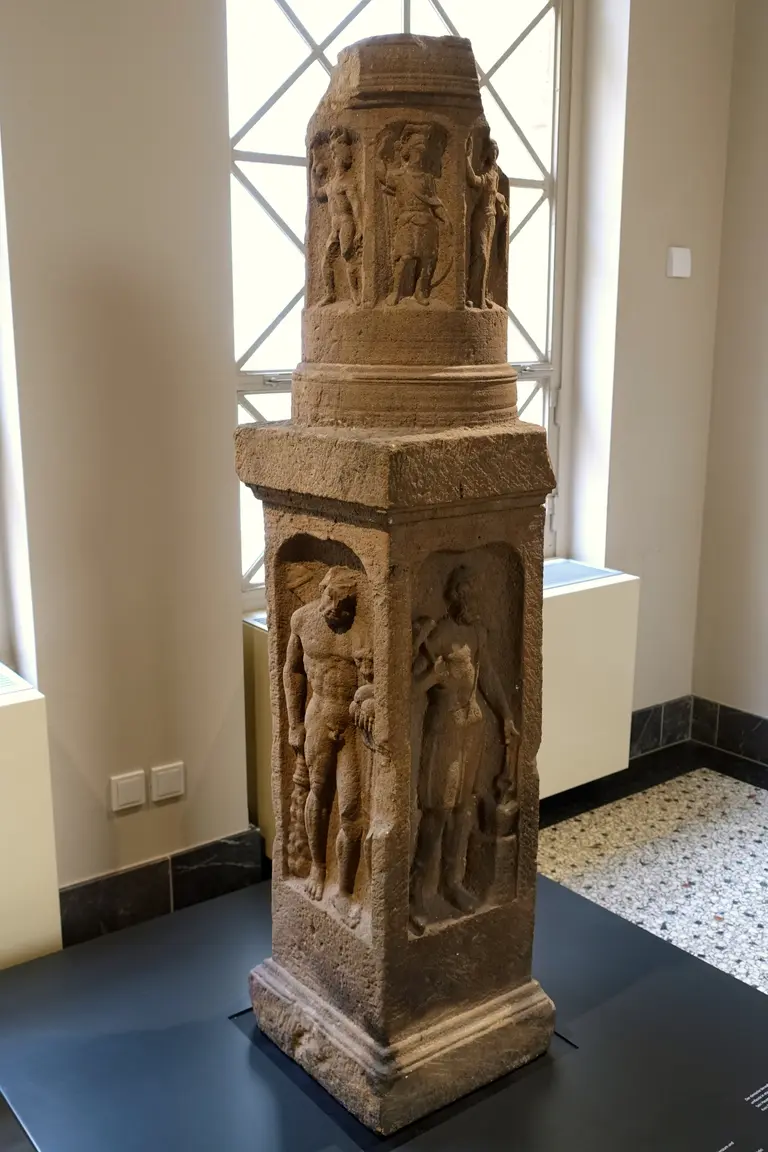
Photograph Credit
"Stele with gods of the week days above four gods, Dieburg" by Daderot — https://commons.wikimedia.org/wiki/File:Stele_with_gods_of_the_week_days_above_four_gods,_Dieburg,_Kreis_Darmstadt-Dieburg,_200-250_AD,_sandstone_-_Hessisches_Landesmuseum_Darmstadt_-_Darmstadt,_Germany_-_DSC09995.jpg — CC0 1.0 (https://creativecommons.org/publicdomain/zero/1.0/). Retrieved 2026-10-12.
Seven-Day Week: The Day Names Skip Two Planets Each Time
Why are there 7 days in a week? The number is still argued, but the day names follow planetary hours: count 24 hours from Saturn and the 25th falls to the Sun.
-
Illustration Credit
Illustration: Asterisms & Astrolabes. Generated schematic image — not a photograph, star chart or historical record. Reuse: CC BY 4.0 (https://creativecommons.org/licenses/by/4.0/) to the extent Asterisms & Astrolabes holds rights in it; no rights in any third-party element are granted.
Lunisolar Calendar: Why 7 Years in 19 Get a 13th Month
The classic lunisolar rule gives 7 years in 19 a 13th month. The Hebrew calendar follows it, the Chinese calendar comes close, and Islamic dates slip 11 days a year.
-
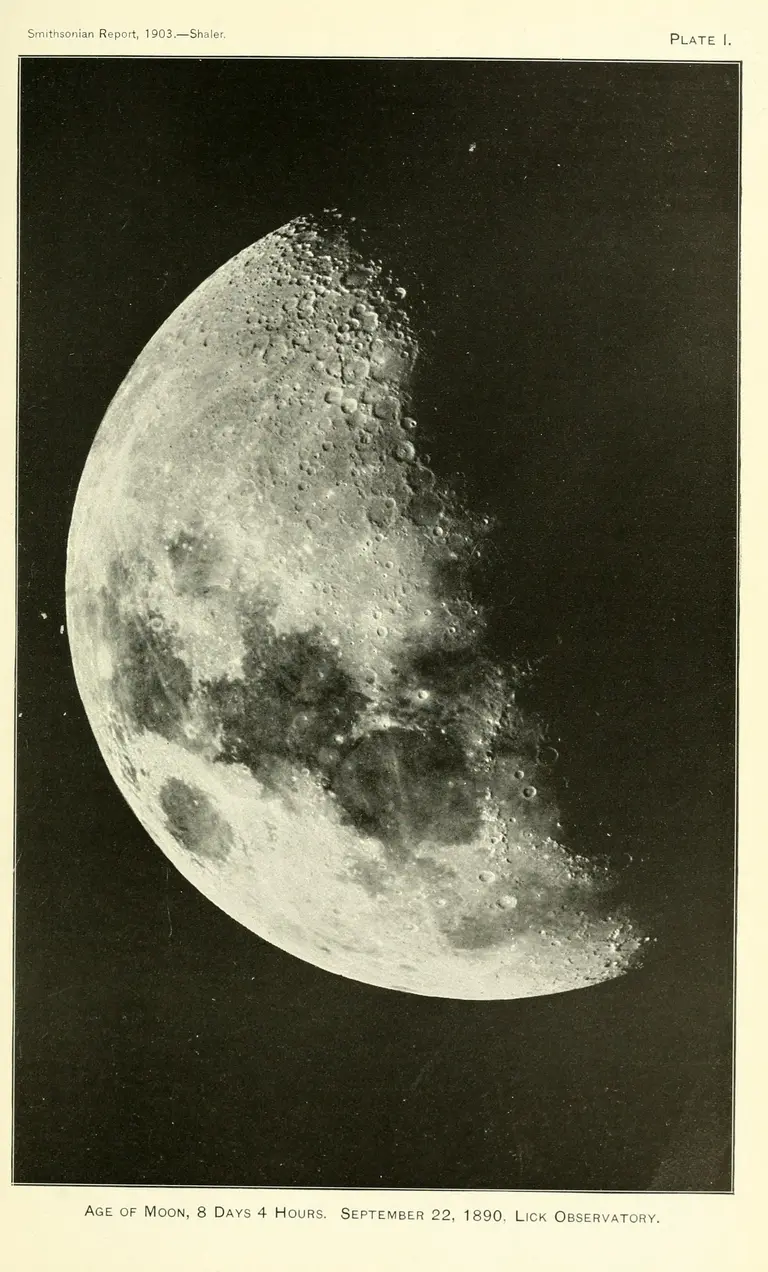
Archive scan Credit
"Age of moon, 8 days 4 hours. September 22, 1890 (Smithsonian Report, 1903, Shaler, Plate I)" by Lick Observatory (Smithsonian Report for 1903, Shaler, Plate I) — https://commons.wikimedia.org/wiki/File:Annual_report_of_the_Board_of_Regents_of_the_Smithsonian_Institution_(1903)_(18248223968).jpg — Public domain (1890 Lick Observatory photograph, no photographer named, published in the US in 1904 in the Smithsonian report for 1903; US: published before 1931; EU: anonymous, published more than 70 years ago). Retrieved 2026-10-13.
Three-Clock Problem: 12 Moons Fall 11 Days Short of a Year
The three-clock problem: day, Moon and year never divide evenly. Twelve lunar months end 10.88 days short of a year, so every calendar has to compromise.


